Dungeons II launched with swords and rifts — and then the soundtrack walked onto Spotify like it owned the Sift. Audio Director Peter Hont called the house sound “Super Nintendo + PlayStation-era music with modern polish,” the kind of over-the-top MIDI that still wants to feel like a JRPG pretends it hired a cathedral choir. For PixelCraftMusic, this is not a side note. This is the desk’s favorite kind of Mojang post: a composer explaining how a whole dimension should sound.
What “Dungeons” still means in headphones
- Core identity: snes/ps1 adventure energy with modern polish — silly and grand at once
- Main Menu keeps a segment of the original theme so veterans feel home before the sequel flexes
- 200+ tracks including variants and layers — reactive world music, not one mission loop
- Overworld ↔ Sift relationship captured in short looping ideas (Peter calls out vii°7)
- Soundtrack is out now on major music platforms
Why the sequel needed different music tech
Dungeons I was camp → mission select → mission → camp. Predictable. Dungeons II is an interconnected world with day/night, location changes, proximity layers for mobs and sculk, and cutscene transitions that cannot hard-cut like a level end sting. Peter’s job became “belong to a world,” not “score a menu of maps.” That is why the track count exploded into variants and layers — the same fantasy as ambient Minecraft listening culture: music that follows you instead of restarting every door.
Peter’s shortlist (steal these for your playlist)
- Main Menu — themes and instruments in one greeting handshake
- Witch — quirky combat that nods Raid Captain silliness and portal pretension
- vii°7 — Overworld/Sift polarity in one endlessly looping idea
The sound of the Sift — harpejji, lap steel, soul
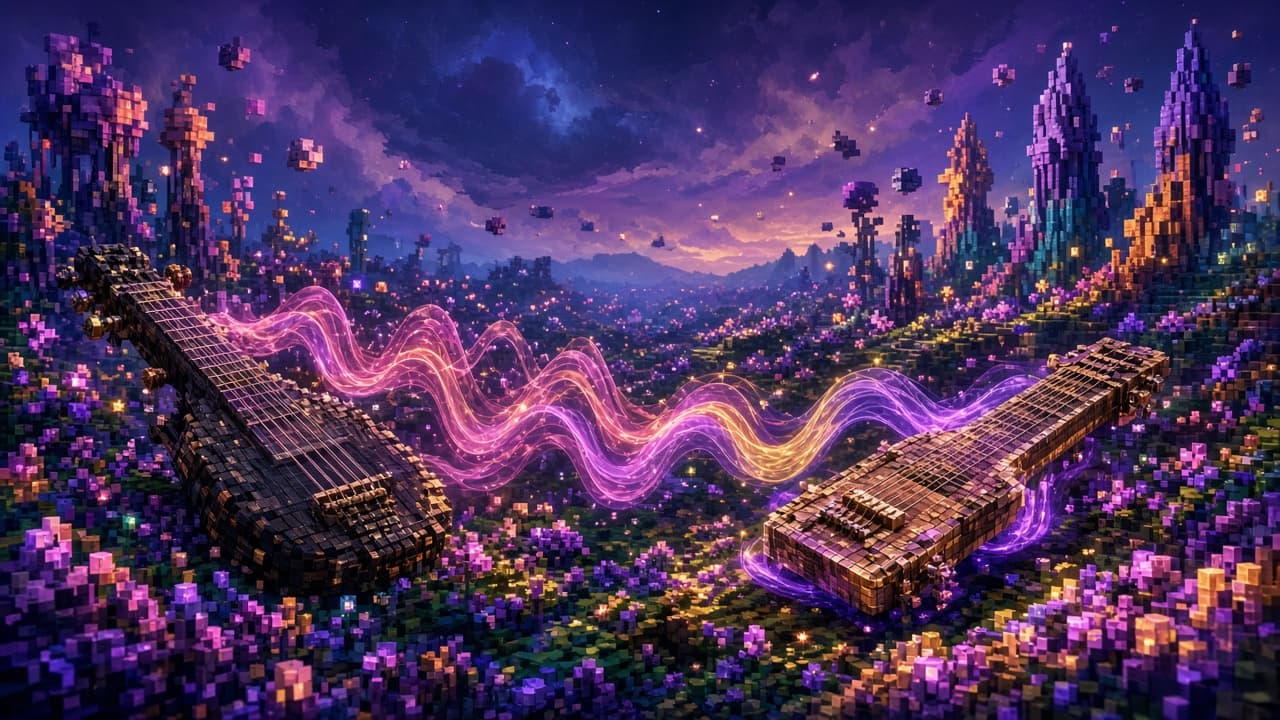
A new dimension needed a new instrument family the way the Overworld leans piano and the Nether leans lava ambience. Harmonium and pipe organ got auditioned and politely rejected. The harpejji — piano-meet-guitar play feel — plus prepared piano and tonal percussion started feeling “almost vanilla Minecraft.” Then a Wellspring guitar pass came back with lap steel instead of harpejji on the melody, and that accident became the “soul sound” for everything from Press Any Key to boss fights. Psychedelic retro sci-fi with a hint of fantasy — ridiculous on paper, perfect in the ears.
Peter also leaned on tritones as a narrative trick: intervals that can resolve in opposite directions, mirroring the deep dark portal into the Sift’s key as you cross. Happy accidents with homework attached. Mastering credit goes to Jett Galindo — the kind of name you write down when you care about loudness without crushing the silly orchestral jokes.
Most Minecraft players hunt easter eggs in spectrograms. Peter wants you to listen elsewhere — keep an ear out.
PixelCraftMusic
If you only buy one takeaway: the Sift has a sonic manifesto now. Play the game loud once. Then play the OST soft while you craft. That is how sequels earn a permanent shelf in a music channel’s brain.